Bypass CSP Using JSONP Endpoints
JSONP endpoints are a fascinating way to exchange information between two different origins. Let’s see how we can utilize JSONP endpoints to bypass a CSP policy. Before we get to that, let’s understand what is JSONP?
Understanding JSONP
JSON with Padding (JSONP) is a technique used to bypass the same-origin policy in web browsers, which restricts scripts from making requests to a different origin than the one the web page is served from. JSONP leverages <script> tags, which are not subject to the same-origin policy, to fetch data from a different origin.
JSONP works by defining a callback function on the client side (e.g., claim), which is specified as a query parameter in the request to the JSONP endpoint. The server responds with a script that calls this callback function, passing the JSON data as an argument. Since the response is a script, it is directly executed in the client’s context, invoking the callback function with the received data
let’s look at an example for better understanding. On client side, we define a JavaScript function, say claim, to process the data.
|
|
Client make a request to a JSONP endpoint on a different origin (e.g., https://jsonpendpoint.com/revoke) through <script> tag. The request includes the name of the callback function as a query parameter as shown below.
|
|
The server (jsonpendpoint.com) responds with a script that wraps the JSON data in the specified callback function. The response looks like this.
|
|
Since this is loaded as a <script>, the browser executes it, invoking the claim function defined on your client side with the JSON data as an argument.
All this is just like including script files from a different origin, and the browser executes them once it receives the full scripts. In the JSONP case, this script received is nothing but a function call with a JSON object as a parameter. If that function is defined on the client side, then it gets invoked automatically, which is claim in our example.
CSP Bypass with JSONP
Let’s get to the main job of exploitation. I have set up a vulnerable web application that reflects user input on the webpage.
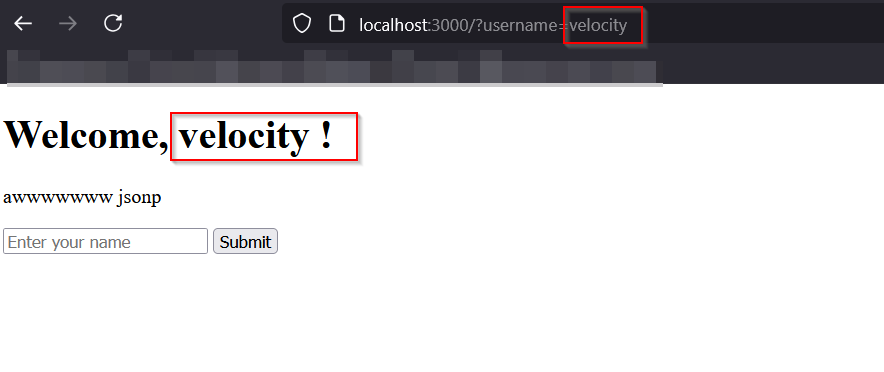
The web application follows the CSP policy specified below.
|
|
This CSP policy is strong. It blocks the payload <script>alert(1)</script> and other image and iframe payloads.
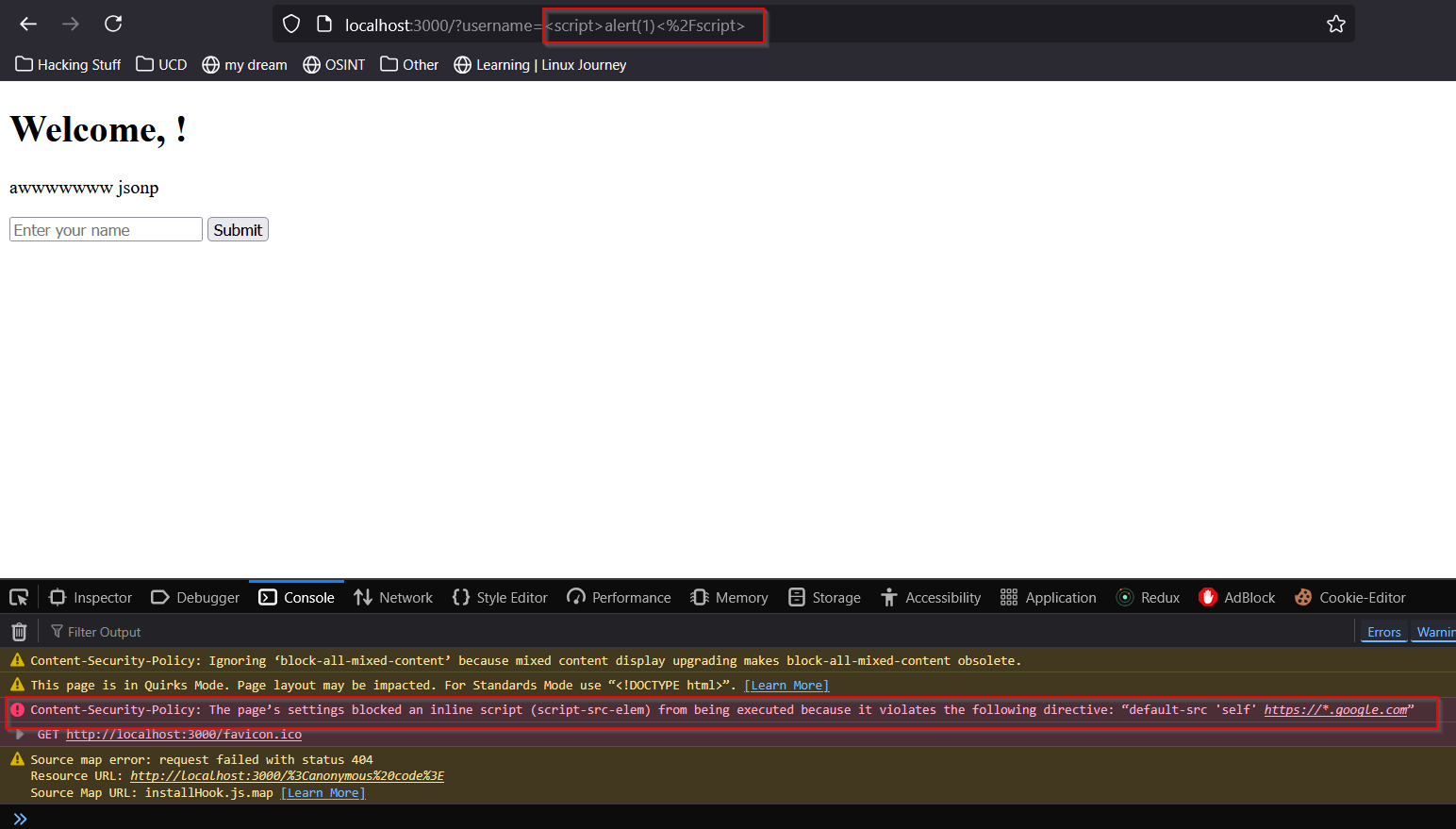
However, by including default-src with “https://*.google.com” as the source, we can bypass this CSP policy to invoke an XSS attack. I found a Google JSONP endpoint to facilitate the attack. Check this github repo for JSONP endpoints.
|
|
Here, we are trying to invoke alert() and it was a success, as depicted in the image below.
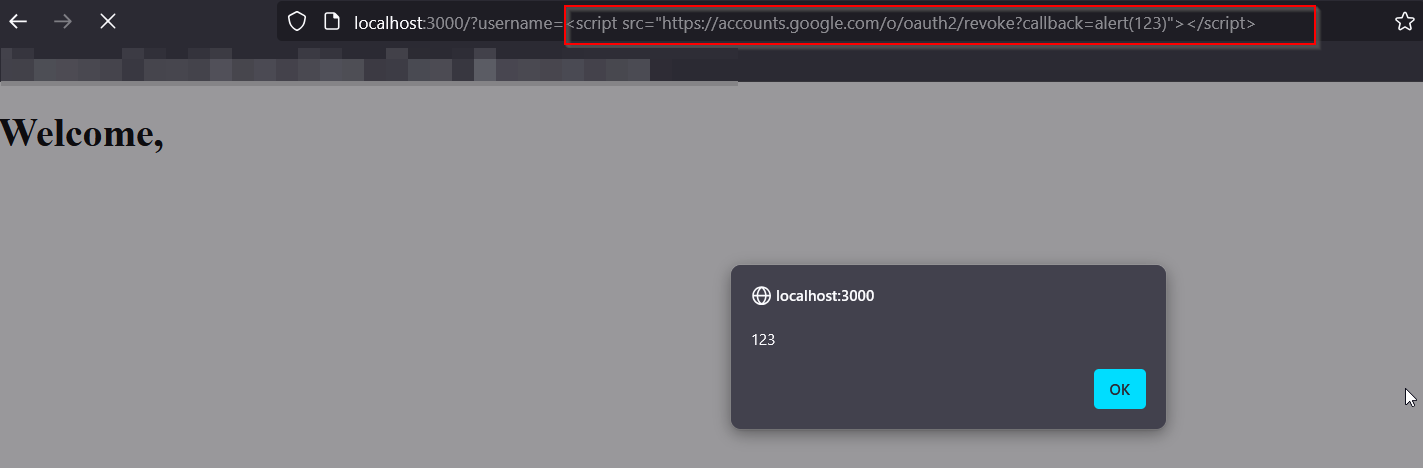
If we look at the network tab, we can see calls to the accounts.google.com domain, which responded with alert(123)({json data}).
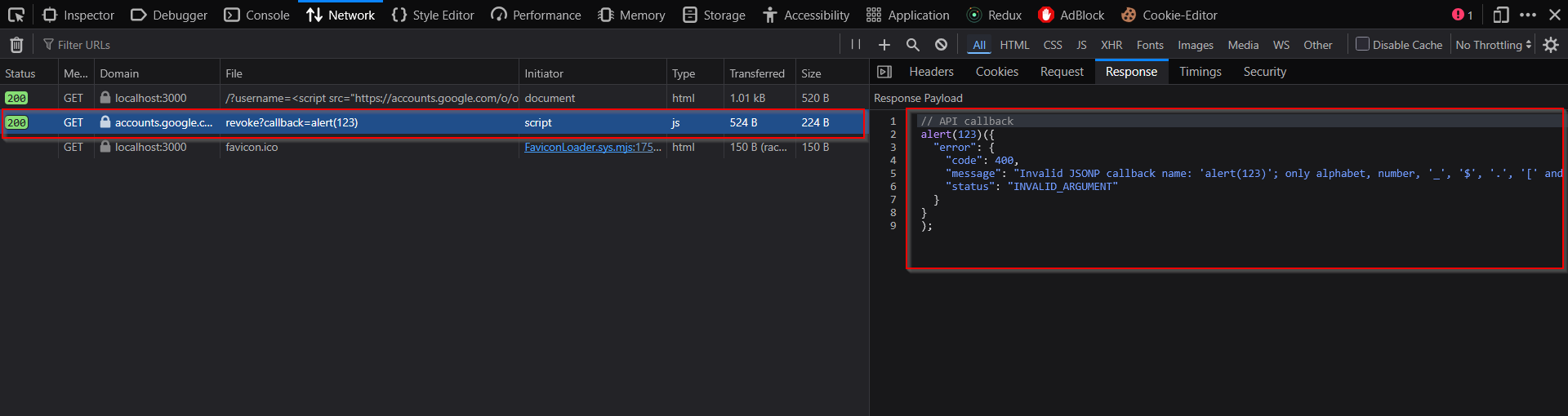
As soon as the client receives the response from the JSONP endpoint, it executes the received script, and thus we saw the alert pop-up.
Thank you !